
You know that feeling when you’re staring at a blank page, trying to name a character, and every name feels too masculine or too feminine? It’s frustrating. Androgynous names solve that problem beautifully. Whether you’re writing a non-binary protagonist, a gender-fluid side character, or simply a person whose identity transcends labels, the right name carries enormous power. Androgynous names feel open, fluid, and memorable ,exactly what strong characters deserve.
This article gives you 200+ carefully chosen androgenous names across multiple categories, including English classics, unique picks, nature-inspired gems, mythology-rooted choices, and fantasy-ready options. You’ll also find name meanings, tips on choosing the right fit, and a full FAQ section. If you’ve been searching for the perfect gender-neutral name for your character or yourself, you’ve landed in exactly the right place. Keep reading.
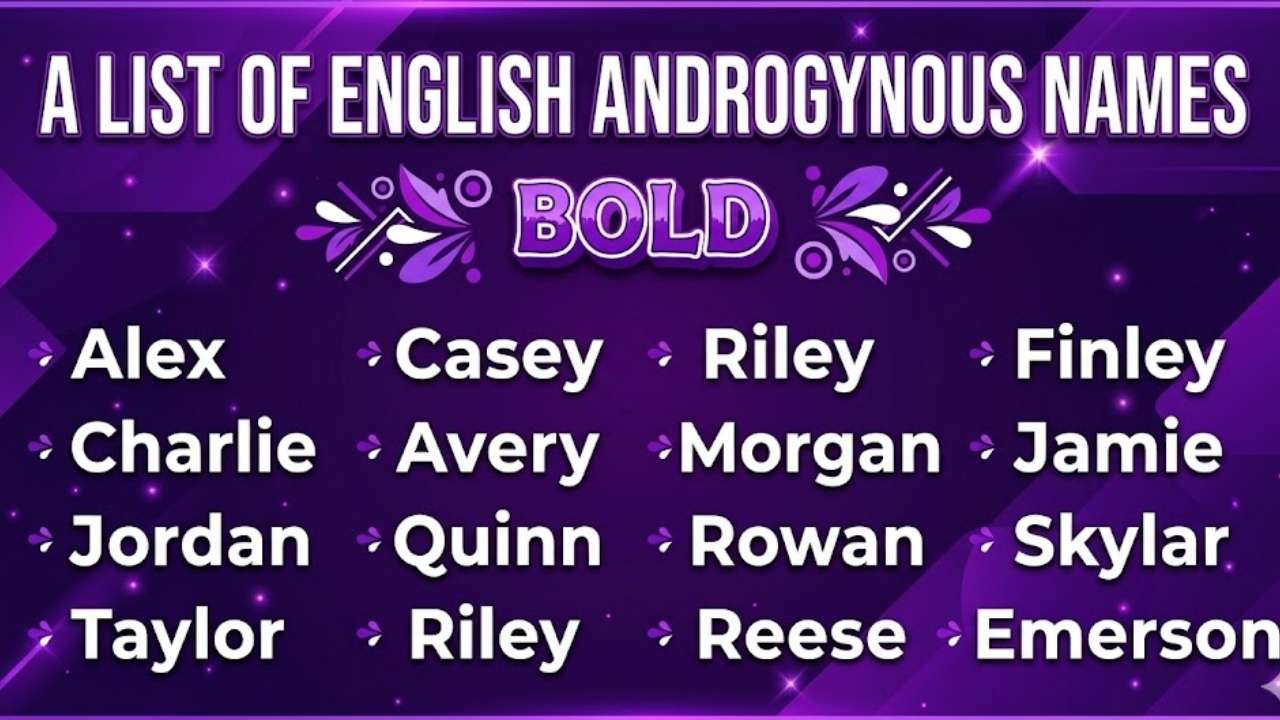
72 English Androgynous Names
English androgynous names have a long and quietly radical history. Many of these names were used freely across genders for centuries before modern naming conventions tried to lock them into boxes. For writers working in contemporary fiction, literary fiction, or realistic settings, English androgenous names feel natural, familiar, and effortlessly cool. They carry cultural weight without feeling forced or exotic, making them perfect for characters readers can root for from page one.
- English gender-neutral names often come from surnames, giving them a strong, grounded feel.
- Many were popularized by real people ,actors, athletes, musicians ,who made them iconic.
- Names like Quinn, Riley, and Jordan work flawlessly across genre fiction and literary fiction.
- Short, punchy names like Ash, Jay, and Wren are easy to remember and carry strong visual energy.
- Many English androgenous names have roots in Celtic, Old English, or Norman French origins.
| Name | Origin | Meaning |
| Jordan | Hebrew | “to flow down” |
| Morgan | Welsh | “sea circle” |
| Quinn | Irish | “descendant of Conn” |
| Blair | Scottish | “plain or field” |
| Emerson | English | “son of Emery” |
Addison: Originally a surname meaning “son of Adam,” now a graceful, gender-free first name with warm energy.
Alexis: Greek in origin, meaning “defender.” Strong, smooth, and entirely gender-neutral in modern use.
Ash: Short for Ashley or Ashton, this name evokes quiet strength, resilience, and a cool minimalist edge.
Aubrey: Old German meaning “elf ruler.” Sounds poetic and slightly otherworldly ,great for fantasy too.
Bailey: An English occupational name meaning “bailiff.” Friendly, approachable, and completely ungendered.
Bellamy: French-English origin meaning “fine friend.” Elegant without being fussy, romantic without being fragile.
Blake: Old English meaning “black” or “pale.” Sharp and striking ,perfect for complex, morally grey characters.
Blair: Scottish Gaelic meaning “plain” or “field.” Understated, quietly confident, and deeply literary.
Cam: A short, punchy name with Celtic roots. Works perfectly as a standalone name or as a nickname.
Cassidy: Irish origin meaning “curly-haired.” Energetic and spirited ,suits bold, adventurous characters well.
Charlie: A warm, universally loved diminutive of Charles or Charlotte. Friendly, human, and immediately likeable.
Courtney: Old French meaning “short nose.” Despite its quirky etymology, it sounds refined and classic.
Darcy: Irish-French meaning “from Arcy.” Thanks to Austen, it carries romance ,but belongs to no single gender.
Devin: Celtic meaning “poet” or “bard.” Soft-spoken yet creative, ideal for artistic, introspective characters.
Ellery: English surname meaning “elder tree island.” Unusual enough to feel fresh, familiar enough to feel safe.
Elliott: Hebrew-English meaning “my God is Yahweh.” Gentle, thoughtful, and beautifully gender-neutral today.
Emerson: Old English meaning “son of Emery.” Literary associations make this one feel naturally bookish.
Evelyn: Originally masculine, now fully fluid. Evelyn sounds timeless and graceful across all identities.
Fairfax: Old English meaning “fair hair.” Unusual, stately, and surprisingly charming as a first name.
Frankie: A lively, warm diminutive of Francis or Frances. Instantly loveable and effortlessly cool.
Garnet: A gemstone name with deep red associations ,earthy, rich, and entirely gender-free.
Granger: English occupational surname meaning “farm steward.” Strong, grounded, and memorable.
Hadley: Old English meaning “heather meadow.” Soft on the ear but surprisingly resilient in character.
Harlow: English meaning “rock hill.” Glamorous without trying too hard, and completely ungendered.
78 Unique Androgynous Names
Some characters don’t belong in any box ,and their names shouldn’t either. These unique androgynous names come from mythology, world cultures, invented naming traditions, and pop culture crossovers. If you want your character’s name to feel genuinely one-of-a-kind, this section is where the magic happens. Androgenous names in this category carry a sense of mystery, depth, and quiet originality that readers will remember long after they close the book.
- Mythological names carry instant gravitas and signal depth of character without explanation.
- Names from global cultures honor diversity and enrich world-building significantly.
- Invented gender-neutral names offer total creative freedom for fantasy and sci-fi worlds.
- Many unique androgynous names have phonetic beauty ,they simply sound right in the mouth.
- Unusual names help secondary characters stand out as memorably as protagonists.
| Name | Origin | Vibe |
| Azriel | Hebrew | Angelic, powerful |
| Shiloh | Hebrew | Peaceful, serene |
| Nikita | Russian | Unconquered, strong |
| Galen | Greek | Calm, healer |
| Saxon | Old English | Bold, historic |
Aeden: A soft variation of Aiden, carrying Celtic fire-god energy without feeling too traditionally masculine.
Arie: Compact and musical, this name works across cultures and feels light, quick, and free-spirited.
Azriel: Hebrew for “God is my help.” Dark, angelic, and deeply compelling ,a favorite in fantasy fiction.
Bee: Tiny but mighty. As a standalone name, Bee carries warmth, busyness, and unexpected sweetness.
Bix: Sharp, modern, and completely ungendered. Bix sounds like someone who breaks rules gracefully.
Britton: A geographic name with British heritage. Sounds solid, dependable, and quietly distinguished.
Carrington: An English place-name turned first name. Sophisticated, a little aristocratic, and beautifully fluid.
Clio: Greek muse of history. Clio sounds elegant, intellectual, and carries genuine mythological power.
Cove: An evocative nature-meets-place name. Cove conjures safety, mystery, and quiet hidden depths.
Darnell: Old English meaning “hidden nook.” Unusual but warm ,suits introverted, thoughtful characters.
Delmar: Spanish-French meaning “of the sea.” Poetic, flowing, and deeply atmospheric for literary fiction.
Doc: Blunt, bold, and instantly memorable. Doc works best for capable, no-nonsense characters with quiet authority.
Eddi: A playful respelling of Eddie. Eddi feels lighter, more fluid, and genuinely gender-expansive.
Elin: Scandinavian form of Helen meaning “sun ray.” Delicate, luminous, and quietly powerful.
Ennis: Irish meaning “island.” Rugged and literary, Ennis carries echoes of wild landscapes and strong hearts.
Felis: Latin meaning “happy” or “lucky.” Rare, smooth, and carries a subtle feline elegance worth noticing.
Flair: A word-name radiating confidence, style, and personality. Flair suits charismatic, expressive characters.
Freddi: A fluid respelling of Freddy or Freda. Warm, friendly, and surprisingly versatile across character types.
Galen: Ancient Greek meaning “calm” or “healer.” Wise, steady, and perfect for compassionate, grounded characters.
Gideon: Hebrew meaning “mighty warrior.” Though historically masculine, Gideon now reads as entirely open.
Goldyn: An invented variant of Golden. Bright, warm, and carries a sense of rare, luminous value.
Haley: Old English meaning “hay clearing.” Popular, familiar, and completely neutral in contemporary use.
Haven: A beautiful word-name meaning “safe harbor.” Ideal for nurturing, protective, empathetic characters.
Hickory: A tree name with a distinctly American frontier feel. Sturdy, warm, and unexpectedly charming.
44 Nature-Based Androgynous Names
Nature has always been gender-neutral ,storms don’t check boxes, and neither does the moon. Nature-based androgynous names carry an organic, timeless quality that works especially well in fantasy, magical realism, and literary fiction. These androgenous names pull from the natural world’s richest vocabulary ,gemstones, plants, weather, celestial bodies ,to create names that feel alive and elemental. For characters who exist outside conventional identity structures, nature offers the perfect naming palette.
- Gemstone names like Onyx, Garnet, and Sapphire feel luxurious, rare, and gender-free.
- Plant and tree names carry a quiet, grounded spirituality readers respond to emotionally.
- Weather names like Storm and Tempest suit powerful, unpredictable, dynamic characters perfectly.
- Celestial names like Moon and Eclipse feel mythic without requiring any fantasy setting.
- Nature names work across fantasy, contemporary, and literary fiction with equal elegance.
| Name | Type | Character Fit |
| Storm | Weather | Bold, dramatic leads |
| Willow | Plant | Gentle, empathetic souls |
| Onyx | Gemstone | Dark, mysterious characters |
| Eclipse | Celestial | Rare, transformative personalities |
| Juniper | Plant | Fresh, spirited, outdoorsy types |
Amethyst: A purple gemstone name associated with clarity and calm. Amethyst suits mystical, intuitive characters beautifully.
Apple: Fresh, unexpected, and entirely modern. Apple works for quirky, optimistic characters who defy expectations.
Berry: Small but vivid, sweet but wild. Berry suits warm-hearted, energetic characters with a spontaneous spirit.
Bird: Simple, free, and full of flight. Bird names a character who refuses to be contained or categorized.
Cedar: A tree name carrying strength, longevity, and a grounded, evergreen kind of reliability.
Cobalt: A deep blue mineral name. Cool, striking, and slightly industrial ,great for complex, layered characters.
Dandelion: Wildly optimistic. Dandelion suits characters who thrive in unlikely places and spread joy naturally.
Diamond: Pressure-forged brilliance. Diamond names characters of extraordinary resilience and quiet, dazzling strength.
Eclipse: Rare, dramatic, and awe-inspiring. Eclipse belongs to a character whose presence changes everything around them.
Elm: A stately tree name. Elm suggests deep roots, quiet endurance, and a dignified, understated presence.
Fern: Delicate but tenacious. Fern grows in dark places and still thrives ,perfect for resilient, quiet characters.
Flurry: A burst of snow and energy. Flurry suits restless, fast-moving characters who bring sudden change.
Gem: Simple, precious, and self-explanatory. Gem names someone rare, valued, and genuinely hard to replace.
Ibis: An elegant wading bird with Egyptian mythological roots. Ibis feels ancient, wise, and beautifully unusual.
Ivory: Pale, smooth, and lustrous. Ivory carries a quiet, aristocratic beauty that suits refined, thoughtful characters.
Jewel: Warm, cherished, and luminous. Jewel names characters who are treasured by everyone around them.
Juniper: A sharp, aromatic evergreen. Juniper suits spirited, independent characters with a refreshingly wild edge.
Kestrel: A small falcon known for precision and focus. Kestrel names sharp-minded, determined, hawk-eyed characters.
Kit: Short, warm, and full of youthful energy. Kit works for clever, adaptable, quick-thinking characters of any age.
Lark: A songbird associated with joy and dawn. Lark names optimistic, musical, early-rising characters beautifully.
Lavender: Soft, aromatic, and deeply calming. Lavender suits gentle, creative, slightly dreamy characters perfectly.
Maple: Warm, sweet, and distinctly North American. Maple names characters with deep roots and seasonal complexity.
Moon: Ancient, mysterious, and endlessly poetic. Moon names characters who influence those around them without trying.
Night: Bold and atmospheric. Night suits characters who belong to shadow, mystery, and the space between worlds.
North: A directional name with a strong, navigational energy. North suits leaders, wanderers, and characters with purpose.
What Are the Most Unique Androgynous Names for Fantasy Characters?
Fantasy writing gives you total freedom, and the best fantasy androgynous names take full advantage of that. When your world doesn’t follow Earth’s rules, your character’s name shouldn’t follow Earth’s gendered conventions either. These names blend invented phonetics, mythological roots, and cross-cultural sounds into something genuinely original. The best androgenous names for fantasy feel like they belong to a world you haven’t visited yet ,but immediately want to.
- Invented names with unusual consonant clusters feel alien, powerful, and world-specific.
- Names drawn from mythology (Greek, Norse, Hebrew, Yoruba) carry instant narrative weight.
- Short fantasy names are easier for readers to remember across a long novel.
- Soft vowel sounds create empathetic, approachable characters; hard consonants signal strength.
- Mix syllable lengths ,one-syllable punchy names contrast beautifully with longer, flowing ones.
Vahn: Sharp, mysterious, and completely unplaceable. Vahn sounds like a name from a forgotten empire’s royal court.
Talyn: Flowing and slightly magical. Talyn evokes wings, freedom, and a graceful kind of dangerous power.
Nyre: Soft yet striking. Nyre feels elemental ,like wind over water, or the last light before dark falls.
Umbral: Latin root meaning “shadow.” Umbral names a character who exists between worlds, light, and darkness.
Zorion: Basque meaning “happiness.” Zorion sounds exotic and ancient while carrying a genuinely joyful energy.
Wryn: A fluid respelling of Wren. Wryn feels more fantastical, lighter on the page, and deeply gender-free.
Xenn: Crisp, futuristic, and completely ungendered. Xenn works brilliantly in sci-fi and high-fantasy settings.
Ulex: Botanical in origin (a genus of thorny shrubs), Ulex sounds fierce, prickly, and quietly beautiful.
Zel: Short, ancient-feeling, and full of quiet intensity. Zel suits wise, old-souled characters in any genre.
Quain: Rare and slightly archaic-feeling. Quain sounds like a name preserved in an ancient text or forgotten tongue.
Orrel: A gentle, unusual name with a soft finish. Orrel suits scholarly, sensitive, detail-oriented characters.
Yeshen: A name with multilingual sonic roots. Yeshen feels cross-cultural, poetic, and entirely gender-expansive.
Raylen: Southern-inflected and musical. Raylen suits warm, storytelling characters with a wandering spirit.
Lowen: Cornish meaning “joyful.” Lowen sounds bright, gentle, and carries an almost musical lilt to it.
Tibby: Warm and slightly old-fashioned. Tibby suits endearing, quirky characters with enormous emotional intelligence.
Perci: A fluid respelling of Percy. Perci feels lighter, more modern, and completely free of gendered expectation.
Xixi: Playful, doubled, and deeply cross-cultural. Xixi sounds like laughter ,joyful, rhythmic, and unforgettable.
Veer: Compact and directional. Veer suits characters who pivot dramatically, change course, and lead others there.
Yae: Simple, open, and beautifully minimal. Yae carries a haiku-like quality ,much meaning in very few sounds.
Goldyn: Invented and luminous. Goldyn names a character of rare value who shines in unexpected, quiet ways.
Rudie: Warm, energetic, and slightly unconventional. Rudie suits scrappy, passionate characters with enormous heart.
Quinto: Spanish-Latin meaning “fifth.” Quinto suits a character with layered identity and a quietly complex history.
Verrier: French occupational name meaning “glassmaker.” Verrier evokes fragility, precision, and quiet artistry.
Tibby: Endearing and old-soul in energy. Tibby suits characters who carry wisdom in a small, unassuming body.
Melv: A short, modern respelling of Melvin or Melva. Melv feels fluid, casual, and genuinely gender-free.
Mythology-Inspired Androgynous Names
Mythology is one of the richest sources of androgynous names on earth. Ancient cultures around the world told stories of gods, heroes, and spirits who existed beyond binary gender ,and their names survive. These androgenous names carry centuries of storytelling, ritual, and symbolic power. When you name a character after a mythological figure or concept, you invite all of that resonance into your story.
- Greek mythology offers dozens of names that were used across gender lines in ancient texts.
- Norse mythology features names that feel powerful, elemental, and completely ungendered.
- Egyptian mythological names carry an ancient, otherworldly gravitas ideal for fantasy.
- Celtic mythological names are musical, lyrical, and deeply atmospheric.
- Many mythology-based names function beautifully in both historical and speculative fiction.
| Name | Mythology | Meaning |
| Clio | Greek | Muse of History |
| Azriel | Hebrew | Angel of Death |
| Galen | Greek | Healer, Calm |
| Ibis | Egyptian | Wisdom, Knowledge |
| Ennis | Celtic | Island, Solitude |
Clio: The Greek muse of history. Clio names a character devoted to memory, records, and uncovering hidden truth.
Galen: From the ancient Greek physician Galen. This name suits healers, scholars, and quietly brilliant minds.
Azriel: The angel of death in Hebrew tradition. Azriel suits a morally complex character who bridges life and endings.
Oracle: Not a traditional name but deeply mythological. Oracle suits prophetic, mysterious, all-knowing characters.
Ibis: The sacred bird of Thoth in Egyptian mythology. Ibis names a character of quiet wisdom and divine knowledge.
Ennis: Rooted in Celtic earth. Ennis names grounded, landscape-shaped characters who belong to wild places.
Lark: Associated with dawn in many European folk traditions. Lark suits joyful, hope-carrying, sunrise characters.
Vesper: Latin meaning “evening star.” Vesper names characters associated with twilight, beauty, and quiet endings.
Sable: Heraldic and regal. Sable names dark-edged characters of great pride, mystery, and careful self-presentation.
Revel: An English word-name with festive, joyful energy. Revel suits characters who celebrate life loudly and freely.
Saxon: Old Germanic warrior class. Saxon names proud, history-carrying characters with deep cultural identity.
Shiloh: Hebrew meaning “peace.” Shiloh names a character whose calm presence settles conflict wherever they go.
Delmar: “Of the sea” in Spanish. Delmar names restless, deep, ocean-like characters full of hidden currents.
Nikita: Russian form of “unconquered.” Nikita suits fierce, independent characters who refuse to be diminished.
March: A month-name with turning-season energy. March suits characters who represent change, transition, and beginnings.
Quennell: Old French meaning “dweller by the oak tree.” Quennell feels rooted, ancient, and quietly aristocratic.
Zorion: Basque for happiness. Zorion names a character whose joy is genuine, earned, and quietly infectious.
Umbral: Shadow-rooted and poetic. Umbral names a character who lives on the edges, between light and dark.
Veer: Directional and dynamic. Veer names a character who pivots with purpose and leads others into new territory.
Haven: A sanctuary name. Haven names protective, empathetic characters who become safe harbor for others.
Goldyn: Rare and luminous. Goldyn names characters who carry an inner light that other people can’t help noticing.
Sutton: Old English meaning “southern settlement.” Sutton names grounded, community-rooted, dependable characters.
Presley: English place-name meaning “priest’s meadow.” Presley suits charismatic, spiritually attuned characters.
Wryn: A fantasy respelling of Wren. Wryn names small but mighty characters with outsized courage and voice.
Lin: Simple and cross-cultural. Lin works in East Asian contexts and broadly across English-language fiction too.
What Makes a Name Truly Androgynous?
Not every name that sounds neutral actually functions as one in practice. Truly androgynous names work across three dimensions: phonetic openness (they don’t sound “coded” to one gender), cultural flexibility (they work across communities), and emotional neutrality (they don’t carry strongly gendered associations). Understanding what makes androgenous names genuinely ungendered helps you choose more intentionally for your characters.
- Phonetic softness ,names ending in vowels or soft consonants feel more fluid and open.
- Surname-origin names bypass gendering entirely because they began as family identifiers.
- Short names (one or two syllables) are less likely to carry gendered sound associations.
- Nature and word names are inherently ungendered because nature itself doesn’t recognize binary categories.
- Cultural familiarity matters ,a name feels neutral only if the reader’s culture experiences it that way.
Wynne: Welsh meaning “fair” or “pure.” Wynne feels clean and open, suited to quietly principled characters.
Hartley: Old English meaning “stag clearing.” Hartley names strong but gentle characters with warm, generous hearts.
Hollis: English meaning “near the holly trees.” Hollis suits steady, grounded, quietly elegant characters.
Jaden: A modern invented name with flexible Hebrew roots. Jaden suits energetic, self-invented, contemporary characters.
Kacey: A phonetic respelling of Casey. Kacey feels lighter, more modern, and completely gender-fluid.
Kelsey: Old Norse meaning “ship island.” Kelsey names adventurous, boundary-crossing, sea-faring spirits.
Kendall: Old English meaning “valley of the River Kent.” Kendall suits poised, sophisticated, quietly powerful characters.
Kingsley: Old English meaning “king’s meadow.” Kingsley names characters who carry natural authority without demanding it.
Lacey: Old French meaning “lace” ,delicate but intricate. Lacey suits detail-obsessed, creative, precise characters.
Leigh: Old English meaning “meadow.” Leigh names peaceful, thoughtful, quietly contented characters beautifully.
Leslie: Scottish meaning “holly garden.” Leslie has a gentle academic quality perfect for studious, reflective characters.
Lindsay: Old English meaning “linden island.” Lindsay suits friendly, social, community-building character types.
Mackenzie: Scottish Gaelic meaning “son of Coinneach.” Mackenzie names spirited, independent, boldly modern characters.
Marlowe: Old English meaning “driftwood lake.” Marlowe names creative, literary, slightly melancholic characters.
Meredith: Welsh meaning “great ruler.” Meredith suits quietly powerful characters with enormous inner strength.
Nat: A stripped-back, minimal name ,short for Nathan, Natalie, or entirely standalone. Clean and confident.
Nicky: Warm, approachable, and free of gendered assignment. Nicky names friendly, social, light-hearted characters.
Oakley: English meaning “oak meadow.” Oakley suits sturdy, reliable, outdoorsy characters with a quiet confidence.
Odell: Old Norse meaning “otter valley.” Unusual and charming, Odell names quirky, self-contained, inventive characters.
Padget: English surname meaning “page” or “servant.” Padget names humble, observant, quietly wise characters.
Parker: Old English occupational name meaning “park keeper.” Parker suits organized, nature-loving, steady characters.
Perry: Old French meaning “pear tree.” Perry names gentle, grounded, quietly optimistic characters.
Peyton: Old English meaning “fighting man’s estate.” Peyton suits strategic, goal-driven, competitive characters.
Quincy: Old French meaning “estate of the fifth son.” Quincy names ambitious, sophisticated, driven characters.
Raleigh: Old English meaning “deer clearing.” Raleigh suits adventurous, historically-minded, curious characters.
Why Do Writers Choose Androgynous Names for Characters?
Writers choose androgynous names for many reasons beyond gender representation ,though that matters enormously. A gender-neutral name keeps the reader’s imagination more open. It prevents unconscious bias from shaping how they picture a character before the story reveals who that person truly is. Androgenous names also age better in fiction. A novel written today with strongly gendered names might feel dated in twenty years. Gender-neutral names stay fresh.
- Androgynous names challenge readers to engage with character through action, not assumption.
- They signal immediately that your character exists outside conventional gender expectations.
- Gender-neutral names allow for later plot reveals about identity without requiring name changes.
- They resonate with non-binary, gender-fluid, and gender-expansive readers who rarely see themselves named.
- From a craft perspective, androgynous names create narrative tension and reader curiosity from page one.
Vinnie: A warm, energetic diminutive of Vincent or Lavinia. Vinnie suits passionate, expressive, loveable characters.
Waverly: Old English meaning “quaking aspen meadow.” Waverly names fluid, adaptable, beautifully restless characters.
Winslow: Old English meaning “wine’s hill.” Winslow suits artistic, slightly eccentric, quietly brilliant characters.
Wren: A tiny bird with a remarkably loud voice. Wren names small characters with outsized presence and courage.
Yardley: Old English meaning “enclosed meadow.” Yardley sounds distinguished and quietly beautiful.
York: A geographic name carrying English heritage. York names stoic, historically-rooted, quietly proud characters.
Tatum: Old English meaning “cheerful bringer of joy.” Tatum suits warm, radiant, community-centered characters.
Taylor: Old English occupational name meaning “tailor.” Taylor names careful, detail-oriented, craft-focused characters.
Theo: Greek meaning “divine gift.” Though often shortened from Theodore, Theo stands beautifully on its own.
Tyler: Old English meaning “tile maker.” Tyler suits practical, hard-working, quietly determined characters.
Vernon: Old French meaning “place of alders.” Vernon names calm, nature-connected, quietly reliable characters.
Ronnie: A warm diminutive of Ronald or Veronica. Ronnie names good-humored, resilient, deeply loyal characters.
Robin: Old German meaning “bright fame.” Robin ,like the bird ,names characters with cheerful, spirited energy.
Sawyer: Old English occupational name meaning “woodcutter.” Sawyer names adventurous, practical, outdoorsy characters.
Scottie: An affectionate diminutive with Scottish heritage. Scottie names loyal, tenacious, big-hearted characters.
Sheridan: Irish meaning “searcher.” Sheridan names restless, questioning, truth-seeking, intellectually driven characters.
Sinclair: French-Scottish meaning “from Saint-Clair.” Sinclair names sophisticated, quietly aristocratic characters.
Are Androgynous Names Becoming More Popular?
Yes ,and the trend is accelerating. Androgynous names have grown steadily in popularity over the past two decades, driven by shifting cultural conversations about gender identity, representation in media, and a general move away from rigid binary conventions. Androgenous names are now consistently appearing in baby name charts, character databases, and fiction writing guides. This isn’t a passing trend. It reflects something deeper: a collective desire for names that feel human rather than gendered.
- Social media and fanfiction communities actively champion gender-neutral names for original characters.
- Non-binary public figures choosing or keeping androgynous names have normalized them broadly.
- In publishing, editors are seeing more protagonists with androgenous names across all genres.
- Baby name sites now have dedicated gender-neutral name categories that grow every year.
- Cultural exchange has introduced beautiful androgynous names from non-Western traditions to global audiences.
Ikhlas: Arabic meaning “sincerity” or “purity of intent.” Ikhlas names a character of deep moral clarity.
Inigo: Spanish-Basque meaning “my little one.” Inigo names passionate, identity-driven, dramatically expressive characters.
Isle: A poetic word-name evoking isolation and self-contained beauty. Isle suits solitary, self-sufficient characters.
Jam: Playful, short, and sweet. Jam names a character who is easy to love, endlessly warm, and deeply approachable.
Jeri: A soft, fluid respelling of Jerry or Geri. Jeri suits friendly, unpretentious, community-oriented characters.
Jewel: Precious, warm, and universally valued. Jewel names a character who makes everyone around them feel richer.
Kairo: A phonetic respelling of Cairo. Kairo names bold, city-spirited characters full of ambition and energy.
Kip: Short, active, and slightly quirky. Kip names characters who move fast, think independently, and travel light.
Kohl: A dark cosmetic substance. Kohl names characters with an artistic, slightly dramatic, beautifully decorated energy.
Laramie: An American place-name with frontier spirit. Laramie names free-range, wide-sky, boldly independent characters.
Lin: Elegant in its simplicity. Lin names calm, clear, wise characters with a still-water kind of depth.
March: A turning-point month. March names characters who represent transition, momentum, and quiet revolution.
Melv: A stripped-down, modern take on Melvin or Melva. Melv names pragmatic, no-fuss, quietly capable characters.
Milli: Warm and slightly vintage. Milli names cheerful, determined, small-but-fierce characters with enormous warmth.
Nasir: Arabic meaning “helper” or “protector.” Nasir names loyal, duty-driven, deeply principled character types.
Nikita: Powerful Russian name meaning “unconquered.” Nikita names fierce, independent, unbreakable protagonists.
Nyre: Invented and elemental. Nyre names characters who feel like natural forces ,unnamed and impossible to contain.
Octavie: A French feminization of Octavius. Octavie names eighth-born characters or those with layered, complex histories.
Olsen: Scandinavian surname meaning “son of Ole.” Olsen names quietly Scandinavian, steady, winter-strong characters.
FAQs
What Are Androgynous Names?
Androgynous names are names that aren’t traditionally associated with one specific gender. They work freely across all gender identities and are used widely for non-binary, gender-fluid, trans, and gender-nonconforming individuals. Androgenous names are also popular in fiction for characters whose gender is intentionally ambiguous.
Are Androgynous Names the Same as Unisex Names?
Mostly yes, though there’s a nuance. Androgynous names often imply names that feel equally balanced across genders, while “unisex” sometimes suggests names that started as gendered and became shared. Many people prefer androgynous names as the term because it doesn’t imply only two genders exist.
Can I Use Androgynous Names for Fantasy Characters?
Absolutely. Androgynous names are especially powerful in fantasy fiction because they signal immediately that your world operates outside binary conventions. Androgenous names from invented languages, mythology, and nature categories work particularly well for non-human or gender-expansive fantasy characters.
Why Are Androgynous Names Important in Fiction?
Androgynous names matter because they allow readers of all gender identities to see themselves reflected in characters. They also challenge reader assumptions and create narrative openness. For writers, androgenous names signal intentional, thoughtful character building from the very first page.
What Are Some Short Androgynous Names?
Short androgynous names include Ash, Jay, Wren, Bee, Kit, Lin, Zel, Kip, Veer, Gem, Nat, and Cam. These one or two-syllable androgenous names are easy to remember, phonetically open, and work across all genres and settings.
How Do I Choose the Right Androgynous Name for My Character?
Think about your character’s personality, cultural background, and the world they inhabit. Nature-based androgynous names suit fantasy and magical realism. English androgenous names work best in contemporary fiction. Mythological names suit epic or historically inspired narratives. Choose the name that feels true to who your character is, not just how they identify.
Are Androgynous Names Becoming More Common for Real People?
Yes. Androgynous names are increasingly chosen by real people, including those who are non-binary, gender-fluid, trans, or simply prefer names that don’t enforce a gendered label. As social conversations around gender identity grow more nuanced, androgenous names have moved from niche to mainstream in many communities.
Conclusion
Androgynous names are one of the most powerful tools a writer ,or a person ,has. A name sets the stage before a single sentence of character development begins. Whether you’re crafting a non-binary protagonist for a literary novel, building a fantasy world where gender is fluid, or simply searching for a name that belongs to a person rather than a category, androgynous names open that door.
The right androgenous names carry weight, beauty, and meaning without restricting identity. From classic English picks like Quinn and Wren to mythological choices like Azriel and Clio, to nature-based gems like Storm and Eclipse ,there is a androgynous name here for every character you’ll ever create. Choose boldly. Name with intention. Your character deserves it.